


I speak up
Because She Matters
For too long, women and girls with bleeding disorders have been told they’re “just carriers.” Because She Matters amplifies their stories and inspires every woman with hemophilia to speak up for her own health and care.
Tracye H, diagnosed with hemophilia B, and her daughter, Sarai

Because She Matters
Women with hemophilia share their journeys from uncertainty to understanding, because finding the correct diagnosis can be life-changing.
Community stories can spark connection and conversation. Watch them now.
Jump to:
Signs of hemophilia in women and girls
Women and girls can have hemophilia—not just carry it. An undiagnosed bleeding disorder may affect your daily life and can even cause complications with menstruation, pregnancy, labor, and delivery.
Nandini P, diagnosed with hemophilia A
Women with a bleeding disorder may experience the following:

Heavy, long periods
Nosebleeds
Unusual, frequent bruising
Muscles or joint bleeding with no physical injury
Prolonged bleeding from small wounds
Prolonged bleeding after dental work, surgery, and childbirth
Your symptoms matter
Recognizing the signs is the first step toward getting the care you deserve.
What is an abnormally heavy period?
Periods that are too heavy or too long can signal a bleeding disorder. Here’s a simple way to tell: the 7-2-1 example. If any of these sound familiar, you don’t have to ignore them. Talk to a healthcare provider about getting tested for a bleeding disorder like hemophilia.

Cycles lasting longer than 7 days

Needing to change your pad or tampon every 2 hours or more frequently

Passing blood clots larger than 1 inch (about the size of a quarter)
Naomi G, diagnosed with hemophilia A
According to a survey of women in the general population, heavy menstrual bleeding can lead to:
- Social life interruptions
- Mental health challenges
- Poor sleep
- Fatigue
- Missed work/school
Naomi G, diagnosed with hemophilia A
According to a survey of women in the general population, heavy menstrual bleeding can lead to:
- Social life interruptions
- Mental health challenges
- Poor sleep
- Fatigue
- Missed work/school
More than “symptomatic carriers”
Meet six women who once lived with undiagnosed hemophilia, who now use their voices to let women and girls know that they matter. In their own words, they share what it was like to live with undiagnosed hemophilia and to seek the answers and the care they deserved.
Amanda G
Diagnosed with
mild hemophilia A at age 36
Brittany G
Diagnosed with
hemophilia A at age 35
Brittnee V
Diagnosed with
mild hemophilia A at age 26
Naomi G
Diagnosed with
hemophilia A at age 11
Nandini P
Diagnosed with
hemophilia A at age 26
Tracye H
Diagnosed with
hemophilia B at age 30
Amanda G
Diagnosed with
mild hemophilia A at age 36
Brittany G
Diagnosed with
hemophilia A at age 35
Brittnee V
Diagnosed with
mild hemophilia A at age 26
Naomi G
Diagnosed with
hemophilia A at age 11
Nandini P
Diagnosed with
hemophilia A at age 26
Tracye H
Diagnosed with
hemophilia B at age 30
Amanda G
Diagnosed with
mild hemophilia A at age 36
Brittany G
Diagnosed with
hemophilia A at age 35
Brittnee V
Diagnosed with
mild hemophilia A at age 26
Naomi G
Diagnosed with
hemophilia A at age 11
Nandini P
Diagnosed with
hemophilia A at age 26
Tracye H
Diagnosed with
hemophilia B at age 30
Amanda G
Diagnosed with
mild hemophilia A at age 36
Brittany G
Diagnosed with
hemophilia A at age 35
Brittnee V
Diagnosed with
mild hemophilia A at age 26
Naomi G
Diagnosed with
hemophilia A at age 11
Nandini P
Diagnosed with
hemophilia A at age 26
Tracye H
Diagnosed with
hemophilia B at age 30
Amanda G
Diagnosed with
mild hemophilia A at age 36
Nandini P
Diagnosed with
hemophilia A at age 26
Brittany G
Diagnosed with
hemophilia A at age 35
Brittnee V
Diagnosed with
mild hemophilia A at age 26
Naomi G
Diagnosed with
hemophilia A at age 11
Tracye H
Diagnosed with
hemophilia B at age 30
Amanda G
Diagnosed with
mild hemophilia A at age 36
Nandini P
Diagnosed with
hemophilia A at age 26
Brittany G
Diagnosed with
hemophilia A at age 35
Brittnee V
Diagnosed with
mild hemophilia A at age 26
Tracye H
Diagnosed with
hemophilia B at age 30
Naomi G
Diagnosed with
hemophilia A at age 11
Conversations that matter
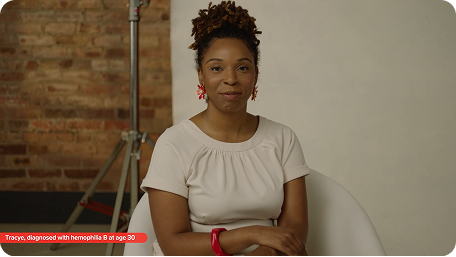
Tracye's journey
Tracye shares her experience with overlooked symptoms and a delayed diagnosis—and what led to her getting answers.
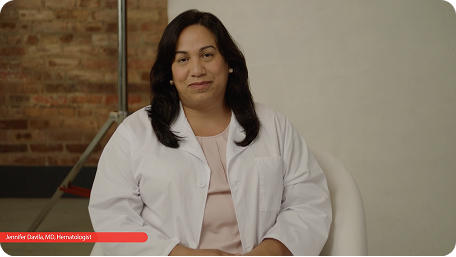
Expert insight
Jennifer Davila, MD, explains why hemophilia in women is often missed—and why earlier recognition matters.
Who gets hemophilia?
Hemophilia often runs in families, but it can also appear without a known history. You may carry the hemophilia gene if your father has hemophilia, your mother has hemophilia or carries the gene, two or more of your children have hemophilia, or you’re related to someone who does.
Get the facts about factor levels
Factor levels can also fluctuate over time, and may be affected by:
Oral contraceptives
Infections
Inflammation
Pregnancy
Aging
Factor level testing and open communication with your doctor can help you understand your unique patterns.
Women and girls with hemophilia deserve to be seen and heard
You know your body best. Document your bleeding history with photos and notes and share it with your doctor.
Ask about factor level and genetic testing, and don’t hesitate to seek a second opinion if you feel dismissed.
Because She Matters advocates
Because She Matters advocates
Advocating for yourself—because you matter
Connect with your healthcare provider and engage with organizations that support women and girls with bleeding disorders.
Preparing to talk to your doctor
- Write down your symptoms before the appointment
- Bring your notes and period tracker as examples
- Ask for factor level and genetic testing if you have bleeding symptoms
- Request a referral to a Hemophilia Treatment Center if needed
- Seek care from another doctor if you don’t feel you’re being heard
Jennifer Davila, MD

Sign up to stay in the know
Get practical info, encouragement, and expert insights delivered to your inbox.