
Start with the basics: hemophilia 101

Interested in learning about hemophilia and how it happens? You’re in the right place.

Zihao lives with hemophilia A.

What is hemophilia?

Hemophilia is a bleeding disorder where the blood doesn’t clot properly. The disease results from a missing or deficient protein, known here as a factor, needed for blood clotting. Without the functioning clotting factor, blood can’t clot as it normally would. 

How do people get hemophilia?

Hemophilia is usually genetic—something you’re born with. However, one third of cases are caused by a spontaneous mutation, meaning it happens by chance. In rare cases, a person can develop hemophilia later in life. This is known as acquired hemophilia. 

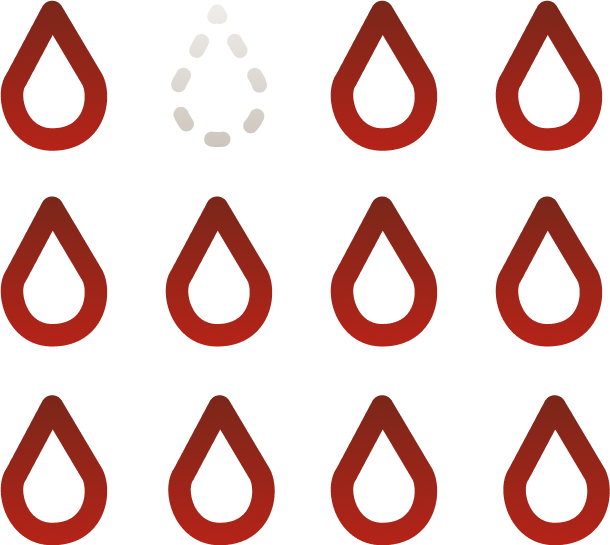
13 blood droplet icons with 1 missing

The two main types of hemophilia

Hemophilia is a bleeding disorder caused by low levels of clotting factor in the blood. While there are many types of bleeding disorders, hemophilia usually refers to these two:

Hemophilia A

Caused by low levels of clotting Factor VIII

About 80% of people with hemophilia have this type.

Hemophilia B

Caused by low levels of clotting Factor IX

It affects the remaining 20%

Understanding severity levels

Hemophilia is categorized as mild, moderate, or severe based on how much clotting factor is in the blood. This chart shows how those levels affect bleeding risk and day-to-day life.

Type

Factor level

What it means

Mild

Factor Level

5–40% 

of normal factor level activity

What it means

Mild hemophilia means a factor VIII or IX level ranging from 5% up to 40% of normal factor level activity. 
 

May bleed more after serious injury or surgery, but only rarely experiences spontaneous bleeding.

Moderate

Factor Level

1–5% 

of normal factor level activity

What it means

Moderate hemophilia refers to a factor VIII or IX level ranging from 1% up to 5% of normal factor level activity.


Bleeding often follows minor injuries.

Severe

Factor Level

Less than 1% of
normal factor level activity

What it means

Severe hemophilia means a person has a factor VIII or IX level below 1% of normal factor level activity.
 

Bleeds can happen spontaneously and frequently.

Note

Bleeding patterns can vary. Talk to your care team about what’s typical for you.

The bleeding disorders spectrum

Hemophilia A and B are the most well-known—but they’re not the only bleeding disorders. In fact, there are more than 17 identified bleeding disorders. Each one affects blood clotting in a different way.
 

Click on the bleeding disorder type to learn more about it:

Hemophilia
Hemophilia
Platelet Function Disorders
Rare Clotting Factor Deficiencies
von Willebrand disease

Glanzmann’s
thrombasthenia

A rare disorder where a protein that helps platelets stick together is missing or doesn’t work. GT is inherited from both parents and affects both men and women.

Bernard-Soulier 

syndrome

Bernard-Soulier syndrome is an inherited condition in which defective receptor prevents platelets from sticking to injured blood vessel walls. It affects both men and women.

Platelet storage
pool deficiency

Platelet Storage Pool Deficiency (PSPD) is the name given to several rare bleeding disorders caused by a deficiency in platelet granules. 
With PSPD there may not be enough of a certain type of granule, the granule may be abnormal, the granule may 
not contain enough of the chemicals, or the platelets cannot release the chemicals from the granules. These abnormalities mean the blood takes longer to form a clot.

von Willebrand Disease
(vWD)

The most common bleeding disorder, affecting 1 in 100 people. Caused by low or malfunctioning von Willebrand protein, it’s inherited from one or both parents and affects men and women equally.

What are inhibitors?

In some people with hemophilia, the body reacts to treatment by developing inhibitors—antibodies against the clotting factor that can destroy it before it has a chance to work.
 

Inhibitors aren’t present at birth. They tend to appear after someone starts factor replacement therapy, often within the first 50–75 exposure days, usually during childhood.

Hemophilia with inhibitors illustration
Why do inhibitors happen?

It’s a defense response.

The immune system sees the infused factor as something unfamiliar and tries to fight it—just like it would with a virus or bacteria. In doing so, it creates inhibitors that stop the treatment from working.

Who’s at risk of developing inhibitors?

Not everyone develops inhibitors, but certain factors increase the chance:

• Type of hemophilia: More common in hemophilia A

• Severity: More likely in people with severe hemophilia

• Family history: A known history of inhibitors raises your risk

• Ethnicity: More common in people of African descent

• Treatment timing: High-intensity factor treatment early on can be a trigger

What are bypassing agents?

When standard factor treatment isn’t effective due to inhibitors, bypassing agents can help. These treatments work around the missing factor—letting the blood clot without needing Factor VIII or IX.
 

Bypassing agents come in two types:

Test tube icon

Plasma-derived

made from donated human plasma

Beaker icon

Recombinant

synthetically engineered in the lab

Navigating ahead

There’s more to hemophilia than just the science.
 

From daily routines to long-term planning, discover tips and tools to help you navigate your own path.

Ready for what's next?
Envelope icon

Sign up to stay in the know

Get practical info, encouragement, and expert insights delivered to your inbox.

Sign up now

You are about to leave ChangingHemophilia.com, a Novo Nordisk website

Continue

You are about to leave ChangingHemophilia.com, a Novo Nordisk website

Novo Nordisk is not responsible for the content of the site you are about to visit.

Continue